Hands, Forks, and Family Arguments: How Indian Americans Actually Eat Chole Bhature
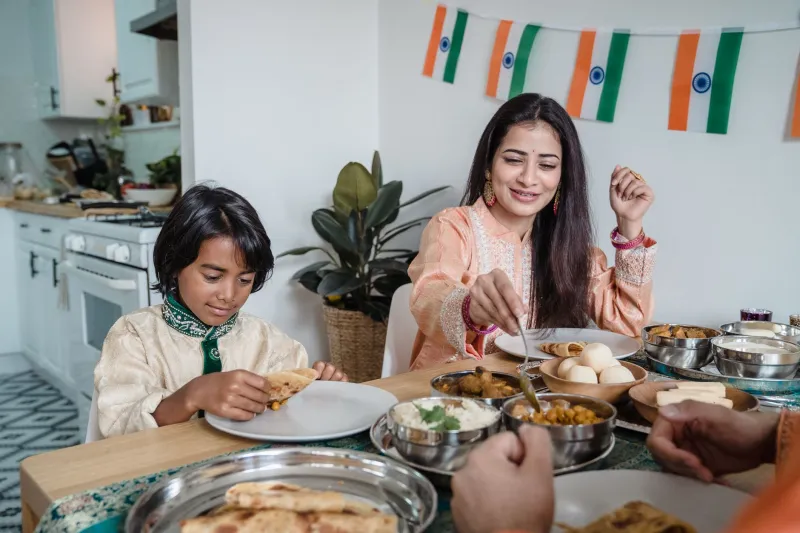
Somewhere between the first generation and the second, a quiet debate takes shape at the Indian American dinner table. It doesn't always get spoken out loud. Sometimes it's just a look — the kind a dadi gives when she sees her grandkid reach for a fork to eat chole bhature. Or the kind a teenager gives when a parent tears off a piece of bhatura with their fingers and dips it directly into the chole, right there at a restaurant in suburban New Jersey.
This is not really about forks. It's about something much bigger.
The Way You Grew Up Eating It
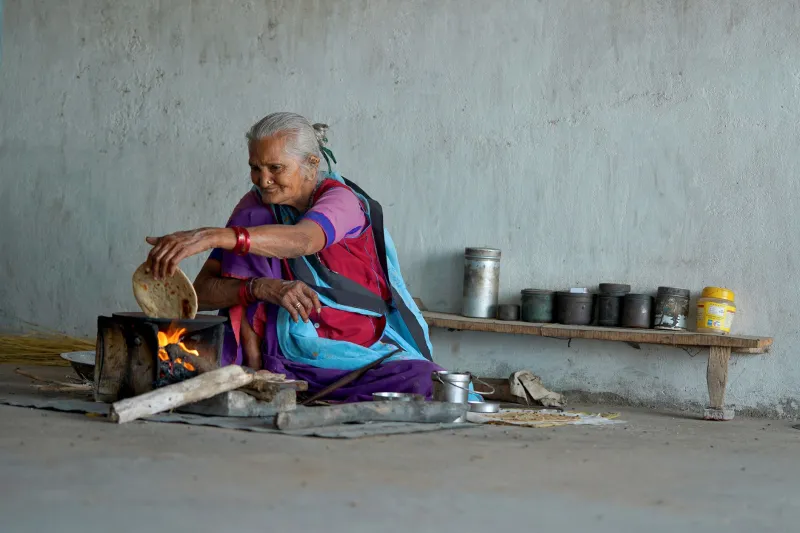
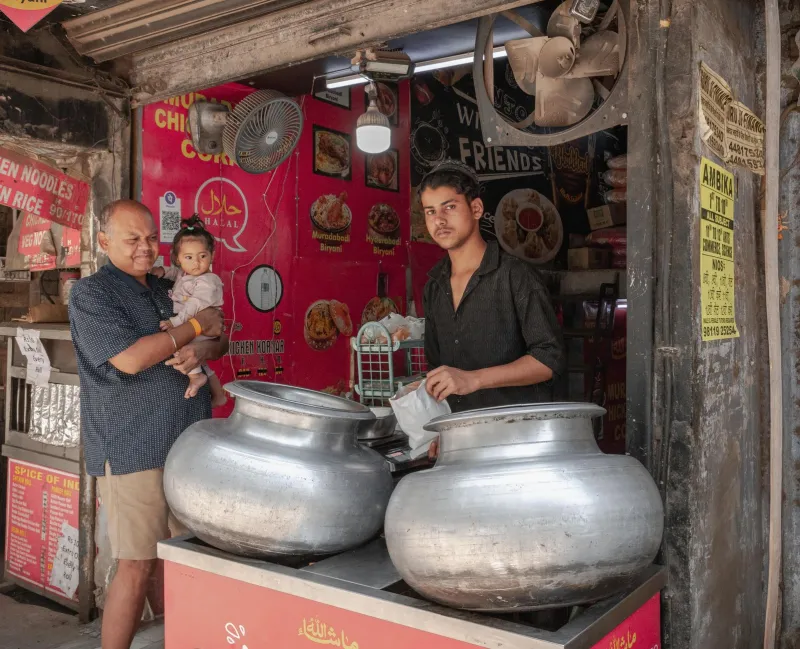
In India, chole bhature is street food. You eat it standing at a cart, or perched on a plastic stool, or leaning against a wall with a paper plate in one hand. There are no forks. There are no napkins worth mentioning. There's just the bhatura — warm, pillowy, slightly crisp at the edges — and you tear it, scoop, and eat. That's the whole experience.
For the first generation of Indian immigrants who came to the US in the '80s and '90s, that muscle memory is deep. Eating chole bhature with your hands isn't a choice you make consciously. It's just how it's done. The bread exists to be the utensil. Tearing a piece of bhatura and using it to scoop up the dark, spiced chole is efficient, tactile, and honestly, it tastes better that way. The bread soaks up the gravy just right. You get the right ratio of chickpea to bread in every bite.
Their kids, though — the ones who grew up in American schools, who ate lunch with plastic forks and learned early that eating with your hands in public meant stares — they often landed somewhere different.
When Two Cultures Share a Table
There's a specific kind of self-consciousness that Indian American kids develop around food. You love your mom's cooking. You want to eat it the way she eats it. But you've also spent years navigating American social norms where eating with your hands — outside of pizza, fries, or a burger — reads as unusual to most of your classmates.
So you learn to code-switch. At home, especially with grandparents visiting, you eat with your hands because that's what the table expects. At a restaurant, you might reach for a fork because it feels less conspicuous. And then somewhere in your twenties, you start questioning why you made that shift in the first place.
A lot of second-generation Indian Americans describe a moment of reclaiming. They go back to eating with their hands — not because someone told them to, but because they realized they'd been performing comfort for people who weren't even watching. And chole bhature, specifically, is often part of that story. It's a dish that genuinely doesn't work as well with a fork. The bhatura is too big, too soft, too meant-to-be-torn. Using a fork and knife on it feels like fighting the food.
What Grandparents Think (And Why They're Not Wrong)
Ask any Indian grandmother about eating chole bhature with a fork and you'll get a look. Not necessarily a judgmental one — though sometimes, yes, that too — but more often a genuinely puzzled one. Why would you do that to yourself?
There's a cultural logic to eating with your hands that goes beyond tradition for tradition's sake. In Ayurvedic thought, touching your food before it enters your mouth is believed to activate digestion, to connect you to what you're eating. Whether or not you buy into that framework, there's something real about the tactile engagement. You feel the temperature of the food. You sense the texture of the bread. You're present in a way that a fork sometimes lets you skip.
Grandparents who grew up eating this way aren't being stubborn. They're preserving an experience that a utensil genuinely changes.
The Restaurant Variable
Here's where it gets interesting. Indian restaurants in the US have largely adapted to American dining expectations. You'll get forks. You'll get knives. The table will look familiar to anyone who grew up eating at American chain restaurants. And most Indian American families, when they're out, will use whatever's on the table without making a big deal of it.
But at home? That's where the real negotiation happens.
Some families have an unspoken rule: at the table, everyone eats however they want, no commentary. Others have a first-generation parent who side-eyes the fork. Others have a second-gen kid who's made a point of eating with their hands specifically because they want their own kids to grow up comfortable with it.
And then there are the families where it genuinely doesn't matter — where the chole bhature is on the table and everyone's just happy to eat it, fork or fingers, and the conversation has already moved on to something else entirely.
What the Food Actually Prefers
Let's be honest for a second: chole bhature is designed for hands. The bhatura is a vehicle. It's meant to carry the chole to your mouth. When you tear it and scoop, you control the ratio. You get the crispy edge in one bite and the softer center in another. You mop up the last of the masala from the bottom of the bowl because leaving it there would be a genuine waste.
A fork gives you chickpeas. It doesn't give you the full experience.
That said — and this is important — the best way to eat chole bhature is the way that makes you feel comfortable and happy. If you're eating alone at your kitchen counter after a long week and a fork means one less thing to think about, use the fork. The chole doesn't care. The bhatura will still be delicious.
The Bigger Thing Underneath
What makes this conversation worth having isn't really about etiquette. It's about what happens when you carry a food culture across an ocean and set it down in a country that has its own ideas about how meals should look.
Chole bhature is one of those dishes that refuses to be fully Americanized. You can't really make it "fusion." It is what it is — a bold, unapologetic North Indian street food that takes time, smells up your kitchen in the best way, and tastes like somewhere specific. When Indian American families argue about how to eat it, they're really arguing about how much of that specificity to hold onto.
And most of them, if you asked, would say they want to hold onto quite a bit of it.
So next time you make a big batch of chole and pull a fresh bhatura out of the oil, maybe skip the fork. Tear a piece. Scoop. Eat it the way it was meant to be eaten — at least once. See if it feels like something.
It usually does.