How Street Vendors Spice by Feel — And What That Actually Means for Your Home Kitchen
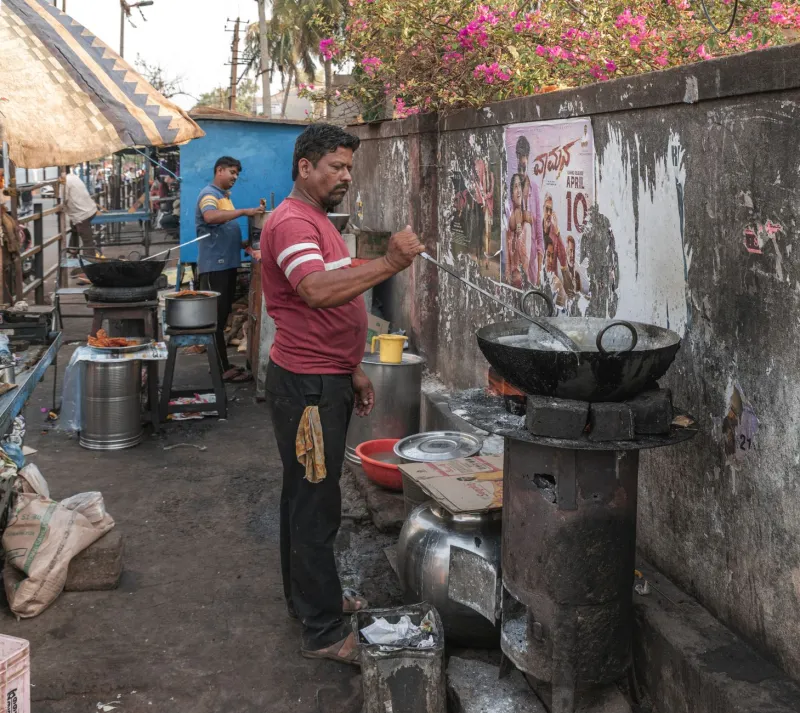
Stand at any busy street corner in Delhi, Amritsar, or Mumbai and watch a vendor work their kadai. Spices fly in with a kind of casual authority that looks almost theatrical. No measuring cups. No recipe cards tucked to the wall. Just a hand that knows — really knows — what the pot needs next.
For anyone raised on American cooking culture, where recipes come with precise quarter-teaspoon increments and mise en place is practically a religion, this can feel somewhere between inspiring and completely intimidating. How do they do that? And more importantly, can you?
The short answer is yes. But first, it helps to understand what's actually going on.
It's Not Magic. It's Muscle Memory Built on a System.
When a chole vendor adds a "pinch" of amchur or a "handful" of onions to their masala base, they're not winging it. They're drawing on a mental framework built over years — sometimes generations — of cooking the same dish, reading the same signals, and adjusting to the same variables.
The system isn't random. It's layered. Indian spicing, especially in street food, tends to follow an internal logic of base-middle-finish:
- Base spices go in early with the oil and aromatics — think whole cumin, bay leaves, cloves, black cardamom. These build the foundation.
- Middle spices arrive with the main ingredient — coriander powder, cumin powder, turmeric, chili. These define the dish's character.
- Finish spices hit at the end — garam masala, kasuri methi, a squeeze of lemon, fresh ginger. These brighten and lift everything that came before.
A vendor doesn't measure because they've internalized this three-stage logic so completely that measuring would actually slow them down. Their hands have become calibrated instruments.
What "A Pinch" Actually Means in Practice
Here's the translation problem: a vendor's "pinch" is not your pinch. A person who has made chole 400 times has a pinch calibrated to their pot size, their spice blend, their water hardness, and their customer base's heat tolerance. Your first-time pinch is just... fingers closing on powder.
So instead of trying to copy the gesture, copy the intention behind it.
When a vendor pinches amchur into a chole pot, they're asking: does this need more acid? They taste, they assess, they add. The pinch is the answer to a question, not a fixed unit of measurement.
For home cooks, that means building a habit of tasting and questioning at every stage:
- Does it need more depth? → Reach for coriander powder or a touch more cumin.
- Is it flat or one-dimensional? → Garam masala or a small knob of butter stirred in at the end.
- Too sharp or harsh? → A little sugar or a longer simmer.
- Lacking brightness? → Lemon juice, amchur, or fresh green chili.
- Needs heat but not just fire? → Black pepper adds heat that builds slowly; red chili adds immediate punch.
These aren't rigid rules. They're questions to ask your pot.
A Starter Framework for Home Cooks (With Actual Numbers)
Until your hands develop their own memory, here's a practical scaffold for a basic chole masala base — built to serve four, using one can (15 oz) of chickpeas or about 1.5 cups cooked from dried:
Whole spices for tempering (in 2 tbsp oil):
- 1 tsp cumin seeds
- 1 bay leaf
- 2 cloves
- 1 black cardamom pod, lightly crushed
Ground spices (added with onion-tomato base):
- 1.5 tsp coriander powder
- 1 tsp cumin powder
- 0.75 tsp turmeric
- 1 to 1.5 tsp Kashmiri red chili powder (adjust for heat preference)
- 1 tsp chana masala or chole masala blend
Finish layer:
- 0.5 tsp garam masala
- 0.5 tsp amchur (dry mango powder)
- Salt to taste
- Optional: a small pinch of black salt for that authentic tangy depth
Now here's the key: treat these numbers as a starting point, not a destination. After your chickpeas have simmered and absorbed the masala, taste. Then ask yourself the questions above. Adjust. Taste again. That back-and-forth is exactly what a vendor is doing — just faster, because they've done it a thousand times.
The One Habit That Changes Everything
If there's a single thing street vendors do that home cooks in the US rarely do, it's this: they taste at every stage, not just at the end.
They taste the oil after the whole spices bloom. They taste the onion base before the tomatoes go in. They taste mid-simmer. They taste before the finish spices. Each taste is a checkpoint, a moment to course-correct before the dish locks in.
Most American home cooking culture treats tasting as a final step — you taste when it's done and then either accept it or panic. Indian street cooking treats tasting as a continuous conversation with the pot.
Start doing that. It will transform your cooking faster than any recipe ever could.
Why This Matters Beyond Chole
Once you internalize the base-middle-finish framework and the habit of continuous tasting, it doesn't stay confined to one dish. You'll find yourself applying it to dal, to sabzi, to a quick tadka over plain rice. The intuition that looks so effortless behind a street cart is really just this framework, repeated until it becomes reflex.
You don't need years on a Delhi street corner to develop it. You need a pot, some chickpeas, and the willingness to taste more than you think is necessary.
The measuring spoons aren't going anywhere. But over time, you might find yourself reaching for them a little less — and trusting your hands a little more.
And that, honestly, is when the food starts to taste like something real.