The Recipe That Lived in Her Head: How One Family Rebuilt Their Grandmother's Chole Bhature from Memory
Priya Sharma grew up watching her grandmother make chole bhature the way most Indian kids do — from the corner of the kitchen, half paying attention, mostly just waiting to eat. Her nani moved through the cooking process without hesitation, without measuring, without explaining. The chole was dark and deeply spiced. The bhature were enormous and pillow-soft. Everything tasted exactly right.
Priya is 34 now and lives in the Chicago suburbs. Her grandmother passed away six years ago. And the chole bhature she makes in her own kitchen — despite years of trying, despite dozens of recipe iterations — still doesn't taste the same.
"It's close," she says. "Sometimes it's really close. But there's something missing and I can't name it. I can just tell."
This is one of the quiet heartbreaks of the Indian American kitchen.
The Knowledge That Didn't Transfer
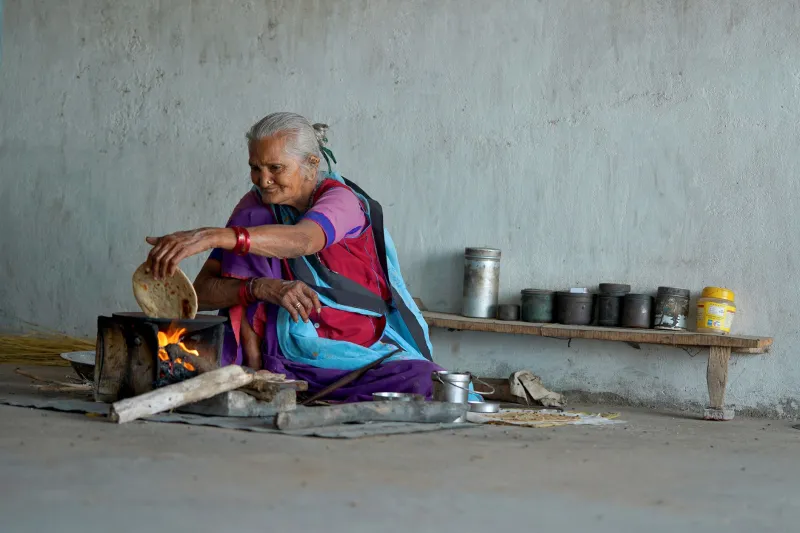
In India, cooking knowledge has traditionally moved through proximity. You learned by standing next to someone, watching the same pot for years, absorbing the rhythm of a dish until it became instinct. The measurements were never written down because they didn't need to be — they lived in the cook's hands, in the way she tilted the masala tin, in how long she let the onions go before adding tomatoes.
When families immigrated to the US, that system broke. Kids grew up in American schools, with American schedules, and the kitchen apprenticeship that would have happened naturally in India simply didn't. By the time many second-generation Indian Americans wanted to learn, the person they would have learned from was either far away or gone.
"My mom tried to teach me," says Rohan Mehta, a 40-year-old software engineer in the Bay Area who has spent the last three years trying to recreate his mother's chole. "But she learned the same way — by watching her mother. She couldn't explain what she was doing. She'd say things like 'cook the masala until it smells right' and I'd ask what 'right' smells like and she'd just laugh."
The Video Call Kitchen
For many families, the reconstruction project happens over video calls — a medium that's both a lifeline and a frustration. You can see your mother's hands. You can watch her add spices. But you can't smell what she's smelling, you can't feel the dough she's working, and the lighting is always wrong.
Sunita Kapoor, a home cook in Atlanta, spent two years doing Sunday morning video calls with her mother in Chandigarh, cooking chole bhature simultaneously on opposite sides of the world. "We'd compare notes in real time," she says. "She'd say her dough looks ready and I'd hold my phone up to my dough and she'd tell me mine needed another ten minutes. It was like a long-distance cooking class."
What she discovered in those calls surprised her. Her mother's recipe was different from what she remembered eating as a child. It had evolved over the years — ingredients had been substituted when things weren't available, proportions had shifted as her mother's taste changed with age. The dish Sunita was trying to recreate didn't exist as a fixed point. It had always been moving.
"That was actually freeing," she says. "I stopped trying to hit an exact target. I started trying to understand the logic of it instead."
What the Notes Left Behind
Some families are luckier. Priya eventually found a small notebook in a box of her grandmother's things — not a proper recipe book, but a collection of notes in Hindi, some in pencil so faint she had to photograph the pages and increase the contrast on her phone just to read them. The chole notes were partial: a list of spices with no quantities, a reminder about soaking the chickpeas with tea bags for color, a single line that said something like "let it go until the oil separates."
"It wasn't a recipe," Priya says. "It was more like a reminder to herself. She already knew how to make it. She was just jotting down the things she might forget."
That notebook became a starting point for a different kind of research — cross-referencing the spice list against published recipes, calling relatives who had eaten the same chole, testing batch after batch until the flavor profile started to converge on something that felt familiar.
The tea bag detail turned out to be significant. Cooking dried chickpeas with a couple of black tea bags gives the chole a deeper, slightly darker color and adds a subtle tannin note that changes the flavor in a way that's hard to describe but immediately recognizable to anyone who grew up eating Punjabi-style chole. It's a technique that doesn't appear in most written recipes but shows up consistently when you ask older Indian home cooks how they do it.
The Dish That Belongs to All of You Now
Rohan eventually got his chole to a place where his mother declared it "good enough" — which, he notes, is about the highest praise she gives anyone. The key breakthrough was understanding that his mother used whole spices toasted in the oil at the very beginning, before anything else went into the pot, and that she used a very specific ratio of coriander to cumin that leaned heavier on coriander than most recipes suggest.
"She couldn't tell me the ratio in numbers," he says. "But she could tell me it was 'more coriander than you think.' That was enough to work with."
For Sunita, the video call project became something she hadn't expected: a way of spending time with her mother that felt genuinely meaningful. "We talk every week anyway, but those calls were different. We were actually doing something together. I learned things about how she thinks about food that I never would have known otherwise."
And Priya? She's still working on it. The chole is close. The bhature are, she admits, probably better than her grandmother's were — she's had the benefit of better flour, a more consistent heat source, and years of deliberate practice that her grandmother never needed because she already knew. What she's still searching for is something more elusive: the particular depth of flavor that comes from decades of cooking the same dish, from a spice tin that's been refilled and reused for thirty years, from hands that have made this exact meal hundreds of times.
Some of that, she's come to accept, can't be recreated. But the attempt itself — the phone calls, the notebooks, the Sunday morning experiments — has given her something she didn't expect. A relationship with a dish that's now genuinely her own.
"She would have liked that I'm still trying," Priya says. "She was stubborn like that. We both are."