Your Hands Are Lying to You: The Hidden Technique Behind Bhature That Street Vendors Never Explain
Here's something that doesn't come up enough in bhature tutorials: the recipe is almost never the problem.
You can nail the flour ratio. You can rest your dough the right amount of time. You can get your oil to exactly the right temperature. And still — still — your bhature come out flatter, denser, or less satisfying than the ones you remember from that dhaba in Karol Bagh or your mom's Sunday kitchen. The culprit, more often than anyone admits, is what happens in the final thirty seconds before the dough meets the oil. It's the shaping. And the shaping is where Indian street vendors and American home cooks quietly part ways.
What a Street Vendor Actually Does (That Nobody Films Closely Enough)
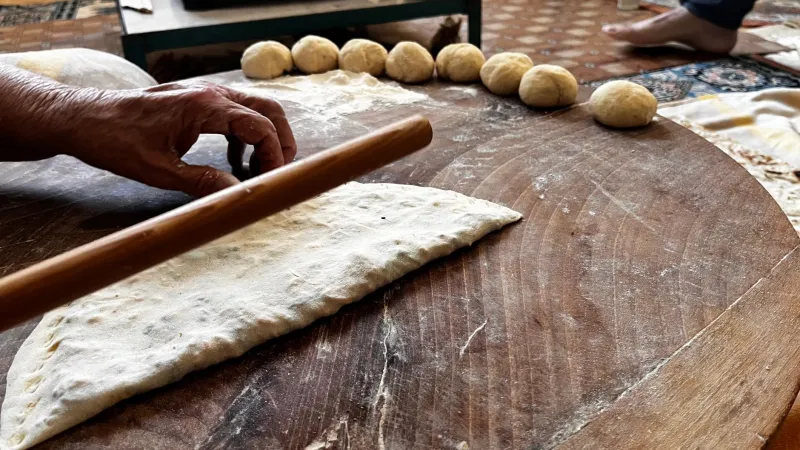
Watch a street vendor in Delhi or Amritsar make bhature and you'll notice something almost meditative about the motion. The dough ball goes down, and instead of aggressive rolling from the center outward — which is how most of us learned to roll anything — there's a kind of coaxing happening. The rolling pin applies pressure in short outward strokes that rotate with the dough, not against it. The vendor lifts and turns the disc constantly, keeping it moving, preventing any one spot from getting worked too hard.
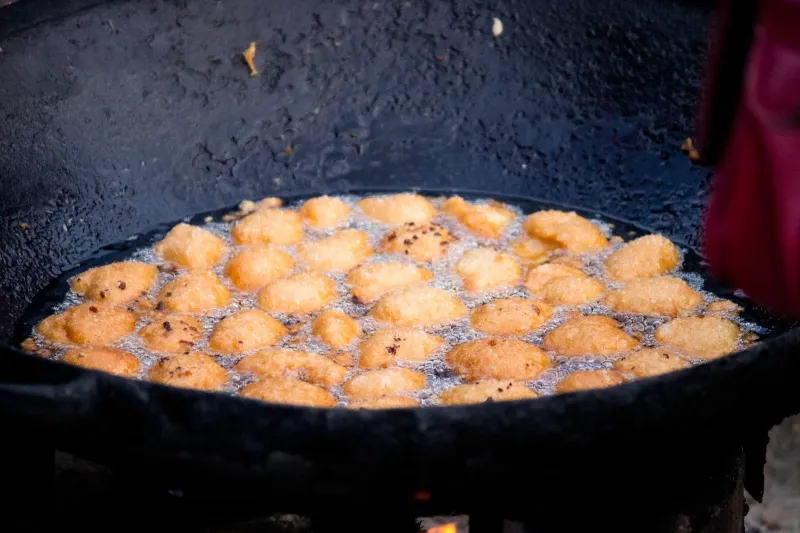
The result is a round that's slightly thicker at the center than at the edges. Not dramatically — maybe a millimeter or two of difference. But that gradient matters enormously. When the bread slides into hot oil, the thicker center traps steam more effectively, and the thinner edges seal quickly, creating the pressure differential that produces the puff. The whole disc billows upward like it's proud of itself.
Most home cooks, especially those of us who learned to roll dough in American kitchens where pie crusts and pizza dough dominate the muscle memory, do the opposite. We roll from center to edge with long, even strokes, applying consistent pressure because even thickness is considered the goal. For a lot of breads, that's exactly right. For bhature, it quietly works against you.
Why American Kitchens Train Your Hands Wrong for This
This isn't a criticism — it's just context. American home baking culture prizes uniformity. Even layers, consistent thickness, predictable results. The rolling pins most of us own are designed for that: long, heavy, with handles that encourage full-length strokes. They're great tools. They're just not optimized for bhature.
Traditional Indian rolling pins — the belan — are tapered, lighter, and shorter. They're built for quick, rotating pressure rather than long even passes. The taper actually helps create that subtle thickness gradient almost automatically when used with the right wrist motion. If you've been using a standard American-style rolling pin and wondering why your technique feels off even when you're trying to copy what you see in videos, the tool itself might be part of the story.
Beyond the equipment, there's the question of surface. Most American kitchens default to lightly floured countertops or silicone mats, which reduce sticking but also reduce the slight resistance that helps a vendor feel the dough's tension as they work it. That tactile feedback is part of how experienced cooks know when to stop rolling — not by measuring, but by feel.
The Folding Question: Does It Actually Matter?
Some vendors — and some home cooks who learned from vendors — use a brief fold before the final roll. The dough ball gets flattened slightly, folded once or twice like a letter, then re-balled and rolled out. This redistributes the gluten structure and creates micro-layers that can contribute to a slightly more complex texture in the finished bread.
Honestly? For most home cooks making bhature on a Tuesday night, this step probably isn't the difference between success and failure. But it's worth knowing about because it explains something: bhature from certain regions or certain vendors have a chewiness that feels almost laminated, like there's structure inside the puff. That's not an accident. It's the result of a quick fold that most recipes don't mention because it's the kind of thing you absorb by standing next to someone who knows what they're doing, not by reading a list of steps.
What to Actually Change in Your Kitchen
If you want to close the gap between your bhature and the ones that live in your food memory, here's where to focus your energy:
Adjust your rolling motion. Instead of long strokes from center to edge, try shorter outward strokes that you rotate around the dough. Lift and turn the disc every few passes. You're not trying to force it flat — you're encouraging it outward. The center should stay just slightly thicker than the rim.
Consider a belan. You can find a traditional Indian rolling pin at most Indian grocery stores in the US for a few dollars. It's not essential, but using one for a few sessions will teach your hands a different motion that you can eventually replicate even with a standard pin.
Don't overwork the edges. The edge of your bhature is where the puff seals itself. If it gets too thin from repeated rolling, it won't hold steam long enough to inflate properly. When the edge looks almost translucent, you've gone too far.
Rest after shaping, not just after mixing. Many recipes include a dough rest but don't mention resting the shaped discs for two or three minutes before frying. That brief pause lets the gluten relax after rolling, which means the bread is less likely to shrink or resist puffing when it hits the oil.
Should You Fight Your Instincts or Lean Into Them?
Here's the honest answer: a little of both.
You don't need to pretend you grew up rolling belan in a Punjab dhaba. Your American kitchen habits aren't wrong — they're just calibrated for different breads. The goal isn't to perfectly replicate street vendor technique; it's to understand what that technique is trying to accomplish and find your own path to the same result.
Some home cooks in the US have actually found that a hybrid approach — using a tapered rolling pin but on a lightly oiled surface instead of a floured one — gives them more control and better puff than either the traditional or the American method alone. That kind of adaptation is exactly what home cooking is supposed to do.
The vendors who make bhature look effortless have years of repetition encoded in their wrists. You're building that too, one batch at a time. The technique gap is real, but it closes faster than you'd think once you know what you're actually trying to do — and why.