Restaurants Get Chole Bhature on Your Table in 30 Minutes. Here's How They Actually Pull That Off.
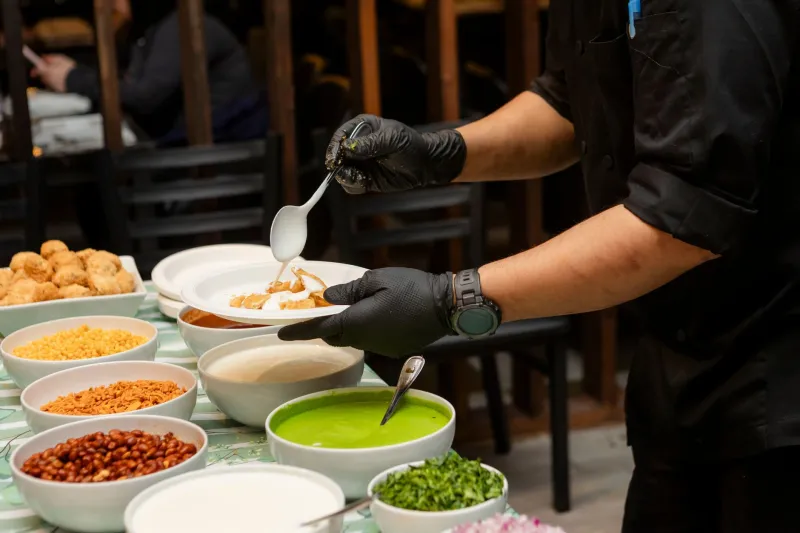
There's a moment every home cook knows well. You've been at it since morning — soaking chickpeas the night before, slow-cooking the masala, wrestling with bhature dough that somehow won't cooperate — and it's already 2 PM. Meanwhile, the Indian restaurant two miles away just served the same dish to forty people in under half an hour.
What do they know that you don't?
Turns out, quite a bit. But here's the thing: some of their tricks are genuinely worth borrowing. Others will quietly hollow out everything that makes chole bhature worth eating in the first place. Knowing the difference is where the real cooking knowledge lives.
The Chickpea Head Start Nobody Talks About
Every decent restaurant doing volume service is working with pre-cooked chickpeas. Not canned — though some lower-end spots absolutely use those — but chickpeas that were pressure-cooked in large batches the night before or early that morning, then held in their cooking liquid until service.
This matters more than it sounds. When you cook chickpeas fresh-to-order, you're fighting physics. Even a pressure cooker needs 25 to 35 minutes on dry chickpeas that have been soaked. Restaurants sidestep that entirely by treating chickpea cooking as prep work, not cooking.
For home cooks, this is the single most valuable thing you can take from the restaurant playbook. Cook a big batch of chickpeas on Sunday — way more than you need for one meal — and refrigerate them in their liquid. They'll hold for four or five days and freeze beautifully for up to three months. Suddenly your weeknight chole goes from a three-hour project to a forty-five minute dinner.
The Masala Base That's Already Waiting
The second major shortcut is what restaurant cooks call a "base gravy" or "makhani base" — a pre-cooked onion, tomato, and ginger-garlic foundation that gets made in large quantities and used across multiple dishes throughout the week.
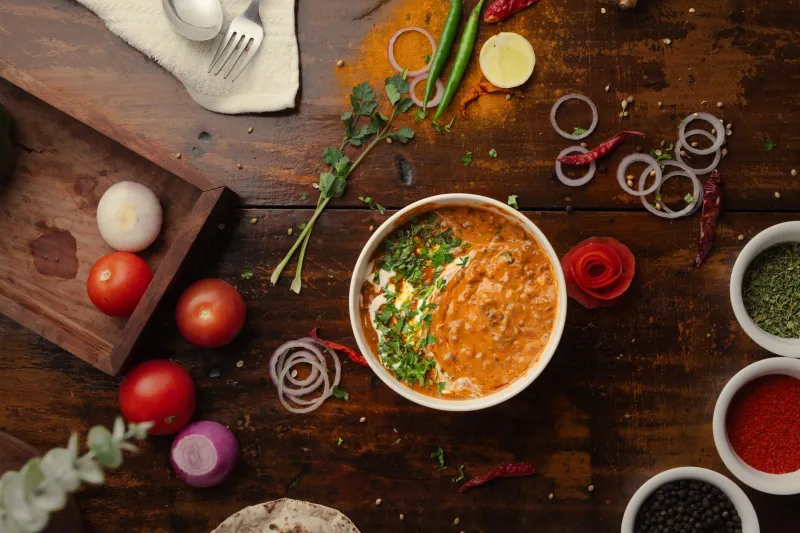
For chole specifically, a restaurant cook isn't starting from raw onions every order. They're pulling a portion of that pre-built base, adding the chickpea-specific spices — anardana, amchur, chole masala, maybe some black cardamom — and building the final dish from there. The deep, slow-cooked flavor that should take an hour of patient stirring? It was built into the base days ago.
This is a technique worth adopting at home, but with one important caveat: the base needs to actually be cooked properly. A rushed base produces a rushed dish, no matter how many shortcuts come after. If you make your onion-tomato base slowly — really letting the onions go golden, really cooking out the raw tomato — and then freeze it in portions, you've done the hardest work once and get to coast on it for weeks.
Where Restaurants Cut Corners You Shouldn't
Not every shortcut translates well from restaurant kitchen to home cook. A few of them actively work against you.
Canned chickpeas. Some restaurants use them. You can taste it — that slightly metallic, waterlogged quality that never fully cooks out. The texture stays softer than it should, and the chickpeas don't absorb the masala the same way. If you're going to eat chole bhature, the chickpeas matter too much to phone in. Batch-cooking dried chickpeas takes more planning, but the difference on the plate is not subtle.
Pre-made bhature dough held too long. Bhature dough is a living thing. The fermentation from yogurt and a small amount of leavening is part of what gives it that slight tang and the structure to puff properly. Restaurants sometimes make large dough batches and hold them refrigerated, which works — but only up to a point. Dough held more than a day starts losing its lift. At home, make your dough fresh, give it a good two to three hours at room temperature, and fry it while it still has energy.
Skipping the whole spices. Speed-focused restaurant versions sometimes skip the tempering of whole spices — cumin, bay leaf, black cardamom, cloves — in favor of just dumping in ground masala powder. The dish still tastes like chole, but it loses a layer of complexity that ground spices alone can't replace. This step takes maybe three extra minutes at home. Don't skip it.
The Oil Temperature Secret
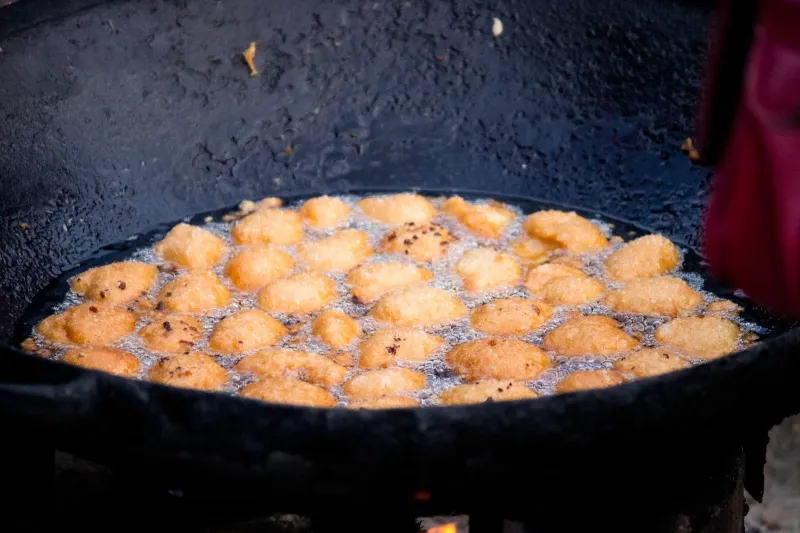
Bhature is where home cooks lose the most time, and often the most confidence. The restaurant secret here is almost embarrassingly simple: consistent, high oil temperature.
Restaurant fryers maintain a steady heat because they're running continuously. At home, your oil temperature drops every time you add a new bhature, which means the next one takes longer and absorbs more oil before it puffs. The fix is to use more oil than feels comfortable — at least two to three inches in a deep pan — and to let it fully recover between batches. A kitchen thermometer helps, but if you don't have one, a small piece of dough should rise to the surface within a couple of seconds and start sizzling immediately. If it sinks, the oil isn't ready.
The Reframe That Changes Everything
Here's an honest truth about the restaurant-versus-home comparison: they're not actually making the same thing you are.
Restaurants are optimizing for volume and consistency. You're cooking for people you care about, with time to do it properly. The version you make at home — with chickpeas cooked from scratch, masala built with patience, bhature fried fresh and eaten immediately — is genuinely better than what most restaurants serve. It's just slower.
The goal isn't to replicate the restaurant timeline. It's to borrow the organizational thinking — batch cooking, pre-built bases, proper prep sequencing — so that the actual cooking on any given day feels manageable instead of overwhelming.
Sardarji didn't rush his chole bhature. Neither should you. But there's nothing wrong with being smart about where you put your effort.
A Simple Game Plan
If you want to bring some restaurant efficiency into your home kitchen without sacrificing what makes the dish worth eating, here's a practical approach:
- Saturday or Sunday: Cook a large batch of chickpeas from dried. Make your onion-tomato base. Refrigerate or freeze in portions.
- Day of cooking: Pull your chickpea and base portions. Temper whole spices, add your base, add chickpeas, build the final masala. Active cooking time: 30 to 40 minutes.
- One to two hours before eating: Make fresh bhature dough. Let it rest at room temperature.
- Right before serving: Fry bhature in properly heated oil. Eat immediately.
That's it. The dish still takes planning, but the day-of effort drops dramatically. And every single bite still tastes like it was made with care — because it was.