What Actually Happens to a Chickpea Overnight (And Why It Changes Everything About Your Chole)
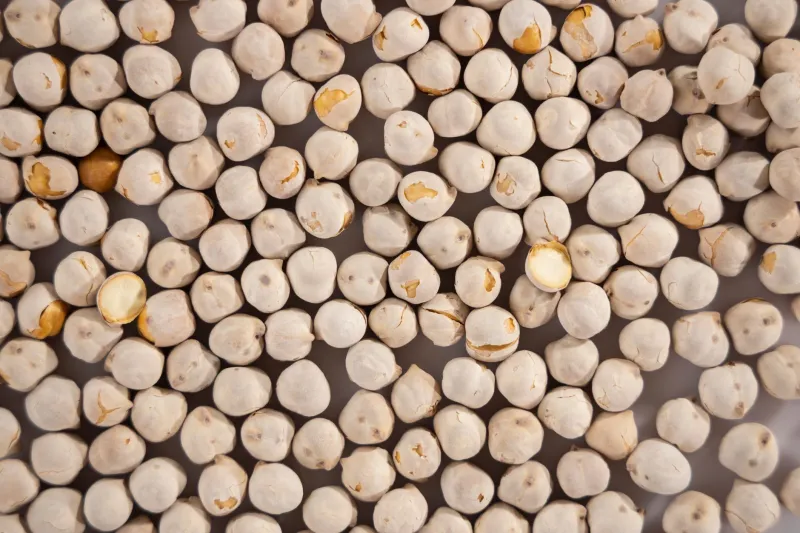
Here's a question most recipes don't bother asking: what is actually going on inside a dried chickpea when you drop it in water?
Because if you've ever followed a chole recipe to the letter — same ingredients, same proportions, same cooking time — and still ended up with beans that were either crunchy in the middle or falling apart into mush, the answer to that question is exactly where your problem lives. Great chole bhature starts way before the onions hit the oil. It starts with a humble bowl of water and a handful of dried chickpeas sitting on your counter overnight.
Let's get into it.
The Chickpea Is a Tiny, Sealed System
A dried chickpea is essentially a seed in survival mode. Its outer seed coat — that slightly waxy, almost papery skin — is designed by nature to keep moisture out and protect the interior until conditions are right for germination. That's great for the chickpea. Not always great for your cooking timeline.
When you soak dried chickpeas, you're doing two things simultaneously. First, you're rehydrating the cotyledons — the starchy interior flesh — which absorbs water and expands. Second, you're softening the seed coat itself, which makes it more permeable to heat later during cooking. Both of these processes take time, and rushing either one is where a lot of home cooks run into trouble.
The starches inside a chickpea are tightly packed and crystalline when dry. Water begins to disrupt that structure, but the real transformation happens when heat arrives. Cooking gelatinizes the starch — essentially melting those crystalline structures into a softer, creamier matrix. That's what gives a properly cooked chickpea its satisfying, almost buttery bite without being grainy or raw-tasting in the center.
Cold Soak vs. Quick Soak: Not Just a Time Question
Most recipes offer two options: soak overnight in cold water, or do a quick boil-and-soak for an hour. Both work, but they don't produce identical results, and knowing why helps you choose intentionally.
The overnight cold soak is slower, but it's gentler. The chickpea absorbs water gradually, and the seed coat softens without getting stressed by sudden temperature changes. You also get a bit of natural enzymatic activity — not fermentation exactly, but a mild biological process that starts breaking down some of the complex sugars (oligosaccharides) responsible for post-meal digestive discomfort. Longer soak, less bloating. That's not a myth.
The quick soak — bring chickpeas to a boil, turn off the heat, let sit for an hour — works because heat rapidly forces water into the seed. It's faster, but the seed coat can sometimes tighten before fully softening, which leads to uneven texture. The quick soak also doesn't give those enzymes time to do their thing, which is why some people find quick-soaked beans harder on the stomach.
One more thing: change your soaking water before cooking. That water has absorbed tannins from the seed coat and some of those indigestible sugars. Starting with fresh water gives you a cleaner flavor base.
Your Tap Water Is Doing Things You Don't Know About
This is the part that surprises people. The mineral content and pH of your water genuinely affects how chickpeas cook.
Hard water — common in many parts of the American Southwest, Midwest, and mountain states — contains high levels of calcium and magnesium. These minerals interact with pectin in the cell walls of legumes and actually reinforce their structure, making them more resistant to softening. If you've ever cooked beans for what feels like forever and they still won't get tender, hard water might be your silent saboteur.
The fix is simple: add a pinch of baking soda to your soaking water. Baking soda raises the pH (makes the water slightly alkaline), which weakens pectin bonds and speeds up softening dramatically. Use it sparingly — about a quarter teaspoon per cup of dried chickpeas — because too much can make your beans mushy and give them a slightly soapy off-flavor. But used correctly, it's a legitimate kitchen hack backed by actual chemistry.
Soft water, on the other hand, produces the opposite effect. Beans can get tender faster, sometimes too fast if you're not watching. If you're in the Pacific Northwest or parts of the Southeast where municipal water tends to be softer, dial back your cooking time and check for doneness earlier than the recipe suggests.
Altitude Changes the Rules Entirely
If you live in Denver, Salt Lake City, Albuquerque, or anywhere else sitting at significant elevation, you already know that baking is weird up there. Beans are no different.
Water boils at a lower temperature as altitude increases — around 202°F at 5,000 feet versus 212°F at sea level. That doesn't sound like much, but for chickpeas, which need sustained high heat to gelatinize their starches properly, it means your stovetop simmer is working at a real disadvantage. Beans cooked at altitude on the stovetop can take 30 to 50 percent longer to reach the same tenderness as beans cooked closer to sea level.
The practical solution? Use a pressure cooker or Instant Pot. Pressure cooking raises the boiling point of water above 212°F regardless of altitude, which is why pressure-cooked chickpeas turn out consistently well whether you're in Miami or in the mountains. For high-altitude cooks especially, a pressure cooker isn't optional equipment — it's almost a necessity for legume cooking.
The Cooking Window: Doneness Is a Range, Not a Moment
Here's something worth internalizing: chickpeas don't go from undercooked to perfectly done in a single dramatic moment. There's a window of ideal texture — soft all the way through, holding their shape, with a slight resistance when you press one between your fingers but no chalkiness at the center.
The easiest test is the pinch test. Take a chickpea out of the pot, let it cool for five seconds, and press it between your thumb and index finger. It should flatten without resistance and without any hard or grainy core. If you feel a firm center, keep cooking. If it collapses into paste instantly, you've gone past the window — still usable, but it'll break down into the gravy more than hold its shape as a distinct piece.
For chole specifically, some breakdown is welcome. The masala clings better to slightly yielding chickpeas, and the ones that do crumble a little help thicken the gravy naturally. But the majority should still be intact and toothsome. It's a balance, and once you've cooked dried chickpeas from scratch a few times and done the pinch test regularly, you'll start to feel it instinctively.
Putting It Together
Great chole isn't mysterious — it's just chickpeas that have been given the right conditions at every stage. Soak long enough, in the right water, with the right pH adjustment if needed. Cook at the right temperature for your altitude. Test for doneness rather than trusting the clock.
Once you understand what's happening inside that little bean at each step, the inconsistency disappears. And when the masala finally hits chickpeas that are perfectly cooked from the inside out, you'll taste exactly why all of this matters.