Why Your Bhature Keep Coming Out Flat (And the Fixes That Actually Work)
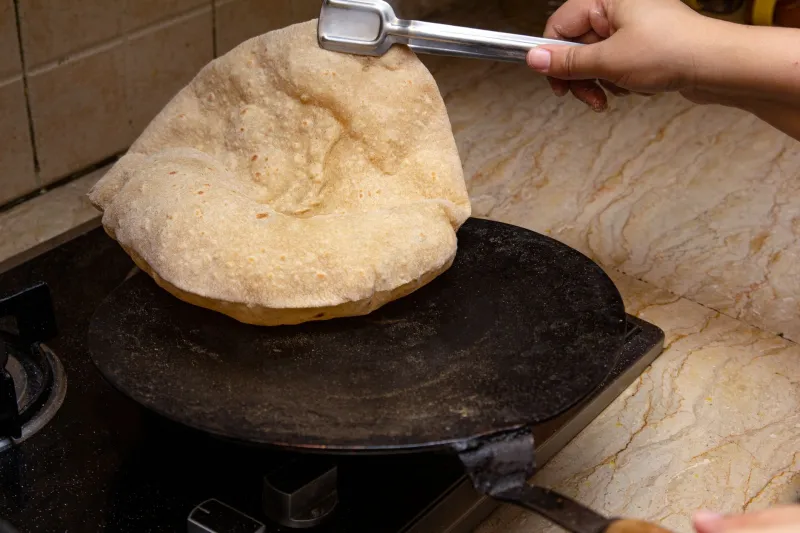
There's a moment every bhature cook knows too well. You lower that round of dough into hot oil, hold your breath, and wait for it to balloon up into that gorgeous, puffed-up pillow. Instead, it just... sits there. Maybe it bubbles a little. Maybe it browns unevenly. But it never inflates the way it does at your favorite dhaba back home, or at that one Punjabi spot in your city that somehow nails it every single time.
The good news: this is almost never a skill problem. It's a science problem. And once you understand what's actually happening inside that dough, you can troubleshoot your way to perfect bhature no matter where in the US you're cooking.
What Bhature Dough Is Actually Doing Overnight
Traditional bhature dough ferments for anywhere from six to twelve hours, sometimes longer. Most recipes tell you this but skip the why, which is where the real understanding lives.
When you mix flour, a small amount of yogurt, a pinch of baking soda, and sometimes a little semolina (sooji), you're creating conditions for two things to happen simultaneously. The yogurt introduces lactic acid bacteria, which begin breaking down some of the starches in the flour and producing carbon dioxide. The baking soda reacts with the natural acidity of the yogurt to produce additional CO2. Together, these gases get trapped in the gluten network you've built by kneading, creating tiny air pockets throughout the dough.
When that dough hits hot oil, those air pockets expand rapidly — and if your gluten structure is strong and elastic enough to stretch without tearing, the whole thing puffs up. If the gluten is underdeveloped, overdeveloped, or if there aren't enough gas bubbles to begin with, you get a flat, dense result.
Simple in theory. Fussy in practice.
The Flour Factor: Not All All-Purpose Is Equal
Here's something US home cooks often don't account for: American all-purpose flour has a higher protein content than the maida (refined flour) used in India. More protein means more gluten-forming potential, which sounds like a good thing but can actually make your bhature tough and resistant to puffing if you're not careful.
A few adjustments that help:
- Cut your all-purpose with a small amount of cake flour (about 20-25% of the total). Cake flour has less protein and mimics maida's softer texture more closely.
- Don't skip the semolina. Even a tablespoon or two of fine sooji in the dough adds a slight coarseness that helps trap gas and gives the bhature a characteristic chew without becoming rubbery.
- Measure by weight when you can. Cup measurements of flour vary wildly depending on how packed it is. Too much flour means a stiff dough that can't expand. A kitchen scale removes that variable entirely.
Fermentation Trouble: Too Cold, Too Warm, Too Fast
This is where US kitchens cause the most problems. Indian recipes were developed in environments that are naturally warm — sometimes very warm — and fermentation times reflect that. A kitchen in Chennai in July is not the same as a kitchen in Minneapolis in February.
If your kitchen runs cold (below 68°F): Your dough will ferment much more slowly, and eight hours might not be enough. The fix is simple: put your covered dough in the oven with just the oven light on. That gentle warmth (usually around 75-80°F) is enough to get fermentation moving. Alternatively, set the bowl over a pot of warm (not hot) water.
If your kitchen runs warm (above 80°F): Fermentation moves faster, and you risk over-fermentation — the point where the bacteria have consumed too much of the available food and the dough becomes overly sour and slack. If you're fermenting overnight in summer, try a shorter rest or move the dough to the refrigerator after the first four hours.
Signs of under-fermented dough: It looks nearly identical to when you mixed it. No bubbles visible, dough feels dense and tight, no sour smell.
Signs of over-fermented dough: Extremely sticky, very sour smell, dough deflates when you press it rather than springing back slowly.
The sweet spot is a dough that's slightly puffy, has visible bubbles when you cut into it, smells pleasantly tangy, and feels soft and pillowy but still holds its shape.
The Oil Temperature Problem
Even perfect dough will fail if your oil isn't right. Bhature need to go into oil that's genuinely hot — around 350-375°F. Too cool, and the dough absorbs oil before it can puff; the outside cooks slowly while the inside stays dense. Too hot, and the exterior browns before the interior has a chance to inflate.
A thermometer is your best friend here. If you don't have one, drop a small piece of dough into the oil. It should sink briefly, then rise to the surface and begin sizzling actively within two to three seconds. If it rises immediately and browns in under a minute, the oil is too hot. If it just sits there slowly bubbling, it needs more heat.
Once the bhature goes in, use a slotted spoon to gently press the top — not hard, just a light, continuous pressure that encourages it to puff evenly. This is the technique you see street vendors use, and it genuinely works.
Altitude and Humidity: The Hidden Variables
If you're in Denver, Salt Lake City, or anywhere above 4,000 feet, you're dealing with lower air pressure, which means gases expand more readily. This sounds helpful, but it can cause your dough to over-proof faster and your bhature to puff unevenly or collapse after frying. Use slightly less baking soda (about 25% less) and reduce your fermentation time by an hour or two.
High humidity kitchens (Florida, coastal areas in summer) may need slightly less yogurt or water in the dough, since the flour absorbs ambient moisture. If your dough feels stickier than expected even with correct measurements, this is probably why.
A Quick Troubleshooting Checklist
Before you start your next batch, run through these:
- Flour type: Are you using 100% all-purpose? Try cutting it with cake flour.
- Fermentation environment: Is your kitchen warm enough? Use the oven light trick if needed.
- Fermentation time: Has it been at least six hours? Does the dough look and smell right?
- Oil temperature: Are you using a thermometer, or guessing?
- Dough hydration: Does it feel soft and pliable, or stiff and tight? If stiff, add a tablespoon of water at a time until it relaxes.
- Rolling thickness: Too thin and the bhature tears; too thick and it won't puff. Aim for about 1/4 inch.
Bhature are one of those recipes where the gap between okay and extraordinary is mostly knowledge, not talent. Once you understand the fermentation process and learn to read your specific kitchen conditions, you'll stop guessing and start getting consistent results. The puff, when it finally happens, is one of the most satisfying things you can produce in a home kitchen.