Why Street Vendor Chole Tastes Like Magic (And What's Actually Going On Behind That Cart)

Photo by Photo by Neilstha Firman on Unsplash on Unsplash
Let's be honest about something. You've stood over a hot stove, added every spice the recipe called for, let it simmer for an hour, and still — still — it doesn't taste like the chole from that dhaba near your parents' place. Or the version from that one cart in Jackson Heights that always has a line snaking down the sidewalk. It's close. But it's not quite there.
You're not imagining the gap. And you're definitely not doing it wrong. What you're bumping into is a combination of food science, technique, equipment, and time that street vendors have quietly perfected over decades. Once you understand the why, you can start closing that distance.
The Spice Problem Isn't About Quantity — It's About Order
The single biggest mistake home cooks make is treating spices like a checklist. You add cumin, coriander, amchur, anardana, black cardamom — check, check, check. But spices behave completely differently depending on when and how they hit the heat.
Tempering whole spices in hot oil at the very start — before the onions, before anything else — is non-negotiable. This process, called tadka or chaunk, physically transforms the spice. The heat causes the volatile aromatic compounds to bloom and release into the fat. When you add ground spices directly to a wet, onion-heavy pan, those same compounds don't get the same exposure. You get flavor, sure, but it's flatter, more one-dimensional.
Street vendors do this instinctively, often working over screaming-hot flames that most home ranges can't touch. That high heat in the first 60 seconds of cooking does more for flavor development than another 30 minutes of simmering ever could.
The fix: Crank your burner as high as it goes. Let the oil get genuinely hot before your whole spices go in. You're looking for a sizzle that sounds almost alarmed. Then lower the heat before adding onions so nothing burns.
Oil Is Doing More Work Than You Think
This one's uncomfortable to say in an era of "use as little oil as possible," but here it is: street chole uses a lot of oil, and that oil is doing actual flavor work.
Fat is a carrier for fat-soluble flavor compounds. When spices bloom in a generous amount of oil, those compounds disperse throughout the dish in a way they simply can't when you're using a thin coating across a nonstick pan. The oil also acts as a cooking medium that lets the masala paste fry — not just cook — which deepens its flavor considerably.
Beyond quantity, type matters. Many vendors use mustard oil, which has a sharp, pungent quality that adds a layer of flavor you won't get from neutral vegetable oil. If you've never cooked with mustard oil, it's worth picking up from any Indian grocery store. Heat it past its smoke point briefly to mellow that sharpness, then let it cool slightly before you start your tadka.
The fix: Don't be shy with oil. For a pot of chole serving four to six people, you want at least four to five tablespoons. And consider swapping in mustard oil for at least part of your cooking fat.
Fermentation and the Overnight Factor
Here's something no recipe ever quite emphasizes enough: time is an ingredient.
The chole from a good street vendor has usually been cooking — or at least sitting — for hours before you get it. Spices continue to hydrate and meld long after the heat is off. The acidic elements (tamarind, amchur, tomatoes) slowly work into the chickpeas. The starch from broken-down chickpeas thickens the gravy in a way that feels rich rather than gluey.
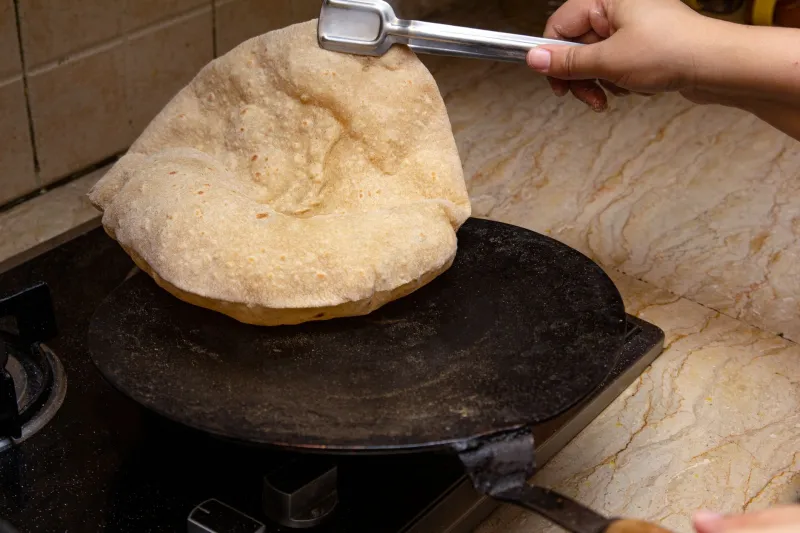
Bhature dough works the same way. A fermented dough — whether you're using a little yogurt or letting it sit overnight — develops a tang and a pliability that you simply cannot rush. That slight sourness isn't just flavor; it changes the texture of the fried bread, giving it that characteristic chew with a crisp exterior.
The fix: Make your chole the day before you plan to eat it. Seriously. Reheat it slowly with a splash of water and taste again — you'll be surprised how much the flavors have rounded out. For bhature dough, give it at least four hours at room temperature, or overnight in the fridge.
The Chickpea Situation
Canned chickpeas are convenient. They're also probably holding your chole back.
Dried chickpeas that have been soaked overnight and pressure cooked retain a slightly firmer texture and a more pronounced earthy flavor. More importantly, the cooking liquid from dried chickpeas — aquafaba, if you want to get fancy about it — is loaded with starch and chickpea flavor. Many vendors use this liquid to thin and enrich the gravy rather than adding plain water.
Canned chickpeas come in a brine that's thinner and often slightly metallic. Even after rinsing, they behave differently in the pot.
The fix: Make the switch to dried chickpeas on a weekend when you have time. Soak them for eight hours, pressure cook until just tender (not mushy), and save every drop of that cooking liquid. Use it instead of water when building your gravy.
The Finishing Touches Nobody Talks About
Two things that street vendors do almost universally and home recipes almost never mention:
First, a finishing tadka. After the chole is done, some vendors heat a small amount of ghee or oil in a tiny pan, bloom a pinch of red chili and cumin in it, and pour that directly over the finished dish. This adds a fresh, sharp top note that cuts through the richness.
Second, acid at the end. A squeeze of lemon or a small pinch of extra amchur added right before serving brightens everything up. It's the culinary equivalent of adjusting the contrast on a photo — everything suddenly looks more vivid.
The fix: Keep a small pan ready for a finishing tadka. Add your acid after the heat is off and right before serving.
You're Closer Than You Think
The gap between your homemade chole and the street vendor version isn't some insurmountable mystery. It's a collection of small choices — some about technique, some about time, some about being willing to use more oil and less caution. Work through these adjustments one at a time, and you'll find yourself getting closer with every batch. The magic was never in the recipe. It was always in the method.