One Swap at a Time: What Happens When You Tinker With Every Ingredient in Chole Bhature
There's a version of chole bhature that lives in your memory. Maybe it's the one from that dhaba near your parents' old apartment, or the plate your masi used to set down without ceremony on Sunday afternoons. That version feels untouchable.
But here you are, standing in a Kroger in Columbus or a Safeway in Sacramento, and the exact chickpeas or the precise flour or the yogurt your recipe calls for just isn't on the shelf. So you improvise. And then you wonder — did I just ruin it?
This is the question that launched a months-long experiment in our test kitchen. We took a traditional chole bhature recipe and swapped one ingredient at a time — keeping everything else identical — to find out what actually changes and what doesn't. The results were surprising, occasionally humbling, and genuinely useful.
The Ground Rules
Every test used the same base recipe. Same proportions, same cook times, same tawa temperature for frying the bhature. Only one variable changed per batch. We tasted with a panel of four people who cook Indian food regularly, and we rated each swap on two dimensions: flavor impact and texture impact.
The goal wasn't to find shortcuts. It was to build a real map of the recipe — to understand which ingredients are load-bearing walls and which ones are more like furniture you can rearrange.
The Chickpeas: Canned vs. Dried, and Which Brand of Canned
This one surprised us the most. We tested Goya canned chickpeas, Bush's canned chickpeas, and two dried varieties — a standard grocery store bag and kabuli chana sourced from an Indian grocery.
The kabuli chana from the Indian store produced the richest, most toothsome texture and absorbed the masala most deeply. That's the benchmark. The standard dried chickpeas from a regular grocery store came in a close second — noticeably less complex in flavor, but structurally solid.
Canned chickpeas? They work, but they behave differently. The texture is softer and they don't hold the gravy the same way. Bush's actually performed slightly better than Goya in our tests — firmer bite, less metallic aftertaste. But the bigger lesson here is this: the chickpea is the most important ingredient in chole. If you're going to spend your effort sourcing one thing correctly, this is it.
Verdict: High impact. Don't skip dried chickpeas if you can help it.
The Flour: Maida vs. All-Purpose vs. Bread Flour
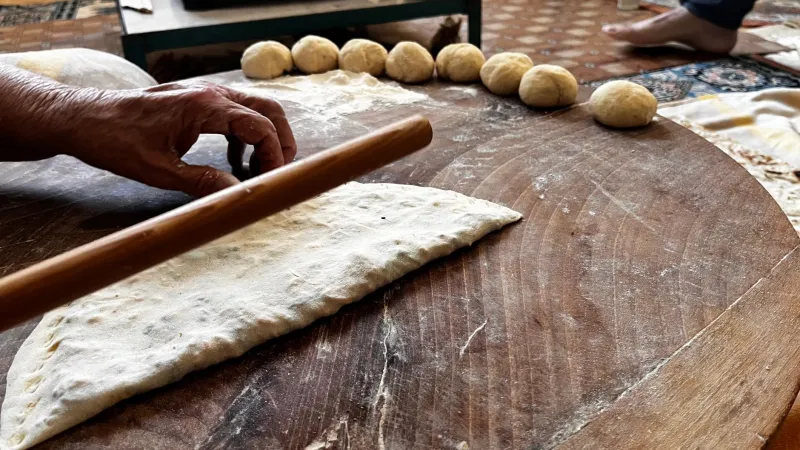
Bhature dough is traditionally made with maida, a finely milled soft wheat flour common in Indian kitchens. In the US, the closest thing is all-purpose flour — and it turns out, it's a pretty decent stand-in.
We tested King Arthur all-purpose, Gold Medal all-purpose, and bread flour. The bhature made with maida (sourced from our local Indian grocery) puffed most dramatically and had the signature chew-to-tenderness ratio that makes a good bhatura feel almost cloud-like. King Arthur all-purpose came surprisingly close — the protein content is slightly higher than maida, which affects the chew, but the difference was subtle enough that two of our four tasters couldn't reliably distinguish them.
Bread flour was a different story. Too much gluten development, too tough, didn't puff as cleanly. Skip it.
Verdict: Moderate impact. All-purpose flour is a legitimate substitute. Bread flour is not.
The Yogurt: Full-Fat vs. Low-Fat vs. Greek
Yogurt goes into the bhature dough and sometimes into the chole as a souring agent. We tested full-fat plain yogurt (Desi Natural brand from the Indian grocery), Stonyfield whole milk plain, Fage Total 0% Greek, and Chobani whole milk plain.
The Greek yogurt — both Fage and Chobani — made the dough noticeably tighter and harder to stretch. The extra thickness of strained yogurt changes the hydration balance. The bhature came out chewier and didn't puff as reliably.
The Desi Natural full-fat yogurt and Stonyfield whole milk were nearly interchangeable. This was one of our most reassuring findings: a good full-fat American yogurt works beautifully in this recipe. Just avoid Greek-style.
Verdict: Low-to-moderate impact. Full-fat regular yogurt from any brand is fine. Avoid Greek.
The Spices: Whole vs. Pre-Ground vs. Supermarket Blends
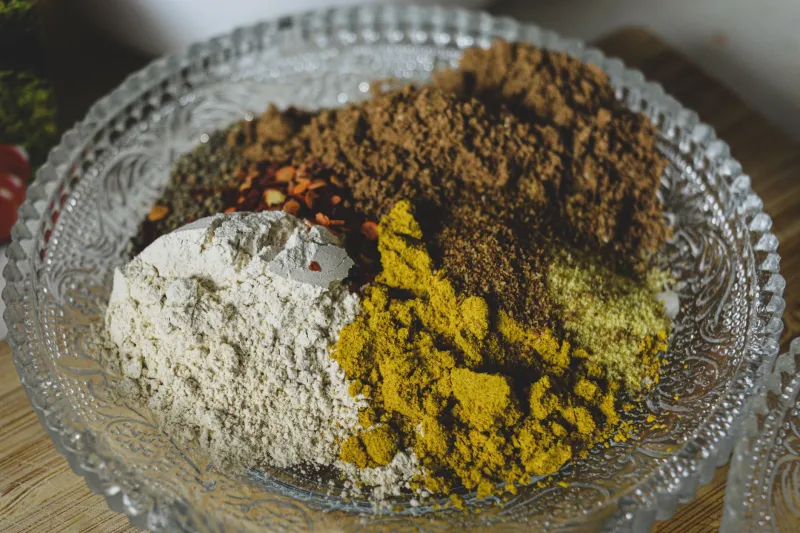
This is where things got philosophical. We tested three chole masala approaches: whole spices toasted and ground fresh at home, a quality pre-ground chole masala from an Indian grocery (MDH brand), and a generic "garam masala" from a mainstream American supermarket used as a substitute.
Fresh-ground whole spices produced the most aromatic, layered chole. There's no debate there. But the MDH pre-ground chole masala came genuinely close — it's formulated specifically for this dish, and it shows. The convenience trade-off is real but manageable.
The supermarket garam masala substitution? It produced something that tasted vaguely Indian but not specifically like chole. The dish lost its defining character — that particular combination of amchur tartness and earthy depth. This is the one swap that actually broke the recipe.
Verdict: Very high impact. Use a real chole masala. Generic garam masala is not a substitute.
The Oil: Mustard Oil vs. Neutral Oils
Traditional chole bhature often uses mustard oil for tempering — it adds a sharp, pungent edge that's hard to replicate. In the US, food-grade mustard oil sold for cooking is available at Indian grocery stores (look for "edible" on the label). We compared it against vegetable oil, avocado oil, and ghee.
Mustard oil produced the most authentically "street food" flavor. Ghee added richness but shifted the dish toward something more home-style and less punchy. Vegetable oil and avocado oil were essentially neutral — the spices dominated and you couldn't really detect the oil's character.
Surprisingly, this swap had less impact than we expected. If you don't have mustard oil, neutral vegetable oil is genuinely fine. If you want that extra layer of authenticity, mustard oil is worth seeking out — but it's not a dealbreaker.
Verdict: Low-to-moderate impact. Nice to have, not essential.
What the Experiment Actually Taught Us
After all the swaps and tastings and slightly heated debates around the table, a clear hierarchy emerged.
The things that matter most: the chickpeas (dried, ideally from an Indian grocery) and the spice blend (a proper chole masala, not a generic substitute). Get these right and the dish has its soul.
The things that matter but have good workarounds: the flour (all-purpose works), the yogurt (full-fat regular yogurt is fine). These affect texture and behavior more than flavor.
The things that matter less than you'd think: the oil. The dish is forgiving here.
The bigger takeaway is this — chole bhature isn't fragile. It's a street food that has survived cart kitchens, coal fires, pressure cookers, and every imaginable improvisation for generations. It can survive your grocery store substitutions too. Now you just know which ones to make with confidence — and which ones to avoid.